Safety & Work Glove Manufacturing: Materials, Coatings & Standards
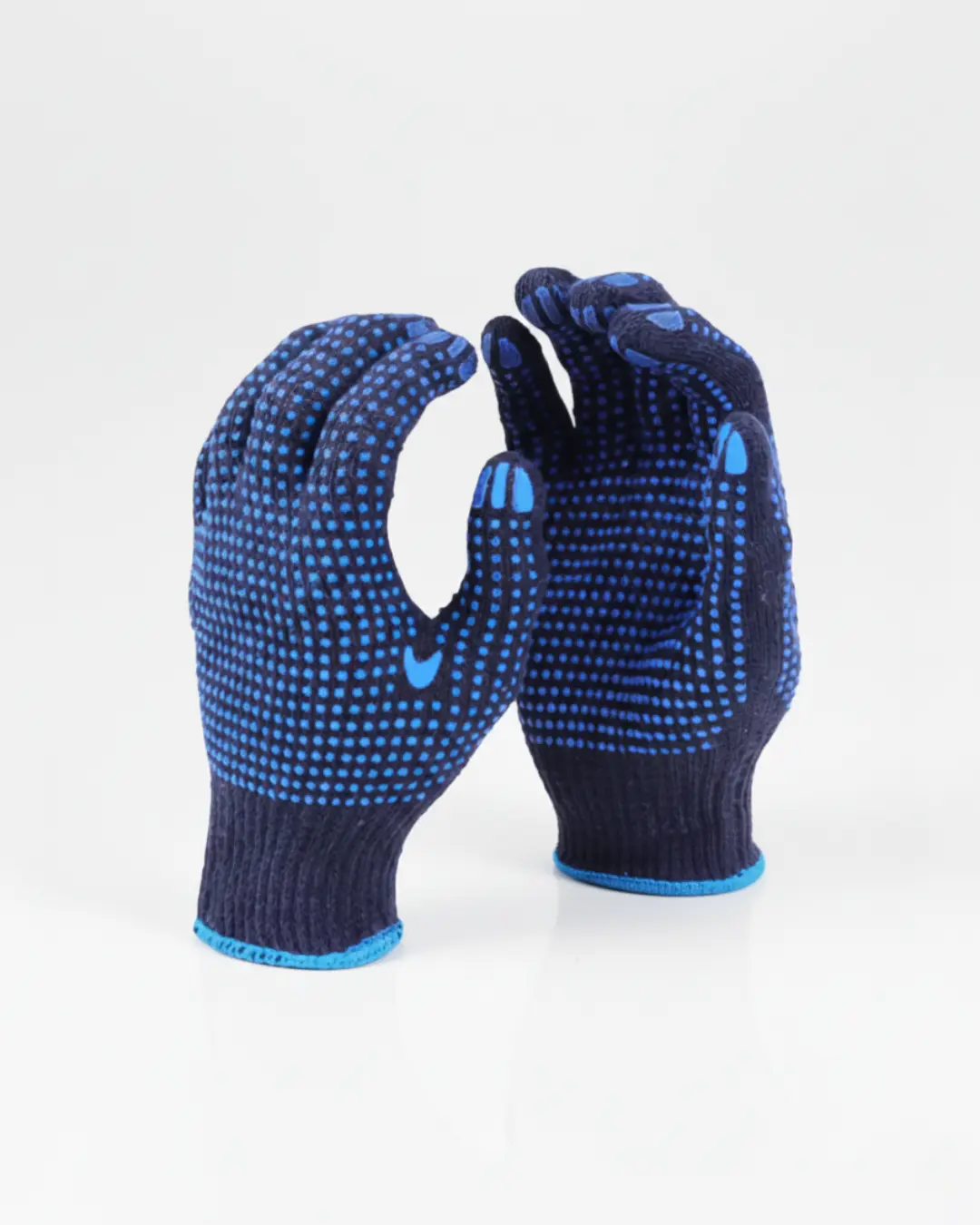
Work and safety gloves look like a simple product, but each pair is an engineered piece of PPE: a shell construction, a coating chemistry and a certified performance rating, all matched to a specific hazard. Buying gloves on price alone without understanding these three layers is how brands end up with stock that fails on the factory floor or fails a compliance audit. This guide covers how gloves are built, what the coatings actually do, and how to read the safety standards printed on the cuff.
How gloves are constructed
- Seamless knit: knitted in one piece on a glove-knitting machine from cotton, polyester, nylon or blended yarn. Lightweight and flexible with no seams to chafe - the base for most dip-coated work gloves.
- Cut-and-sew (leather or fabric): panels cut from split leather, canvas or fabric and stitched together. Used for rigger gloves, welding gloves and anything needing a rigid cuff, reinforced palm or higher cut resistance than a knit shell can offer.
- Dipped/moulded: a former is dipped directly into liquid latex, nitrile or PVC to build the glove without a textile shell at all - common for chemical-handling and disposable gloves.
- Liners: fleece, thermal or terry liners are added for cold-store and winter gloves, either knitted integrally or inserted as a separate layer.
Coatings: what each one is actually for
The coating is where grip, durability and chemical resistance are decided. Palm coverage (palm-only, 3/4, or full-dip) and coating thickness change the trade-off between dexterity and protection.
- Nitrile: the industrial default - strong abrasion and puncture resistance, good oil and grease resistance, holds up in rough handling. Available foamed for grip or smooth for a firmer shell.
- Polyurethane (PU): thin, close-fitting and highly tactile - the choice for precision assembly and electronics handling where finger sensitivity matters more than abrasion resistance.
- Latex: excellent wet and dry grip at low cost, but weaker abrasion resistance than nitrile and a known allergy risk for some wearers, which has pushed many industrial buyers toward nitrile instead.
- PVC: resistant to a broad range of chemicals and cheap to produce, but stiffer and less breathable - typically used for gloves with heavier dip coverage in wet or chemical environments.
Reading the safety standards
- EN 388 (mechanical hazards): the EU standard for abrasion, cut, tear and puncture resistance, shown as a set of ratings next to a shield icon. It is the number most buyers check first for general industrial gloves.
- EN 407 (heat and fire): covers flammability, contact heat, convective heat, radiant heat and contact with molten metal - relevant for welding and foundry gloves.
- ANSI/ISEA 105: the US equivalent to EN 388, rating cut, puncture and abrasion resistance on its own scale - buyers shipping into the US typically need gloves tested and labelled against this standard, not EN 388 alone.
- Chemical resistance (EN 374): tested against specific named chemicals with a breakthrough time - a glove is only "chemical resistant" to the chemicals it was actually tested against.
Common mistakes when sourcing gloves
- Assuming one coating fits every task: a nitrile glove built for handling sheet metal is the wrong choice for fine assembly work, and vice versa. Specify the task, not just "work gloves."
- Ignoring size distribution: gloves that run small or large across a size range cause returns and complaints even when the material is correct. Confirm the size chart against a physical sample before bulk.
- No test report on file: if a certification level is claimed, ask for the third-party test report referencing that batch or fabric construction, not a generic supplier claim.
- Overlooking seam and cuff finishing: for cut-and-sew styles, loose stitching at the thumb crotch and an unfinished cuff edge are the first points of failure in the field - inspect these on the pre-production sample.
Mesh Apparel produces seamless knit, coated and cut-and-sew leather gloves alongside its apparel lines, from assembly and rigger gloves to insulated winter styles. If you have a hazard profile and target market in mind, we can recommend the shell, coating and standard that fits before you commit to a sampling run.
Frequently asked questions
Seamless knit vs cut-and-sew - what's the difference?
Seamless knit gloves are knitted in one piece and dip-coated for grip - light and flexible. Cut-and-sew gloves are stitched from leather or fabric panels, used where higher cut protection or a rigid cuff is needed.
Nitrile, PU or latex - which coating should I pick?
Nitrile for abrasion and oil resistance in general industrial handling; PU for dexterity in precision assembly; latex for wet grip, with an allergy trade-off that has pushed most industrial buyers to nitrile.
Do I need EN 388 or ANSI/ISEA 105 certification?
Required for regulated PPE use; EN 388/EN 407 for the EU market, ANSI/ISEA 105 for the US. Always ask for the batch-specific test report, not just a claimed rating.